
Our flawed Constitution and current times
Returning to the field,,,,

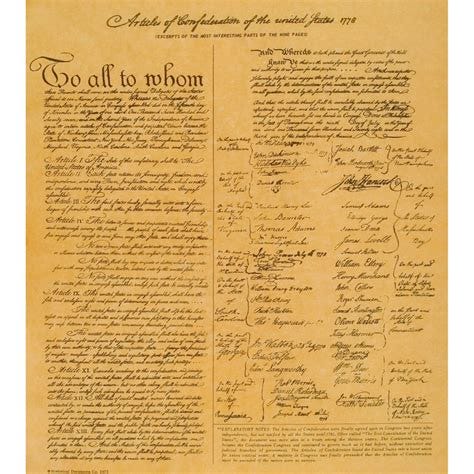
Events since January 20 of this year have revealed what has always been at the heart of the Constitution of 1787, a potentially uncontrolled executive. When all three branches of government become the property of one faction, and the leader of that faction becomes the executive, the Constitution empowers what can be called a constitutional monarchy.
In the summer of 1787, the Congress of the United States of America called for an assembly in Philadelphia to gather and work on necessary amendments to the existing framework of government, the Articles of Confederation. Instead, a group of counter-revolutionaries decided to throw the old document away and write a new one. The new document minimized the role of the people, divided the government into parts so that it would make majority rule difficult and moved the center of power beyond the reach of the common man. This should not be surprising as it is exactly what the “Founding Fathers” had in mind, whatever they may have said about “checks and balances.”
Over the last 250 years, the original government of the United States under the Articles has became lost to history. Yet, as has become clear to many disaffected by both traditional Democrats and Republicans, the current government of the United States is not serving the majority of the American people but rather a small elite who use it for private gain and political power. We need to recover awareness of the thirteen years during which the United States were governed under the Articles of Confederation. These were years of great accomplishment, the establishment of an independent North America and the beginning of a new experiment in confederal government without a king and where power remained close to where people lived.
There exists a profound neglect of this beginning. One might assume there would be interest in these years, in which the government of the United States was fundamentally different from the government that we have come to know. But the confederal period has never been fully assimilated into the great American myth of the “Founding.” Nor has the model of confederal government expressed in the Articles gotten much respect from those who have commented on the period. The confederation and the Articles either have been ignored or have been dismissed as a thankfully short-lived detour. This neglect and disregard is not justified. Indeed, the neglect of the Articles helps explain both the failure of conservative critics of the present American regime to go beyond mere criticism of “Washington’ and “big government” and the failure of its defenders to offer meaningful reforms of their own.
Reconsideration of the Articles of Confederation is an indispensable step in educating the impulse toward less government that has long been one of the dominant strains of American politics. Reconsidering the Articles can tell us something not only about how confederal government might work but also refocus attention on the advantages for democracy of renewed governance at state and local levels. The Articles are crucial in this regard in that they stress not “less government” as much as “more politics.” And they are as deeply rooted in the American political tradition as the Constitution of 1787.
In further installments, I will try to cast some light on the Articles. This does not imply that a simple return to 1786 would resolve our 21st century problems. Our current government is too big, too much in the hands of the rich and open to allowing a government of sycophants prostrate themselves and the country to an amoral demagogue. We must find a different way to meet the challenges we face in the globalized, warming world of the 21st century while also preserving the justice, progress and fairness by which America has prospered. Reminding ourselves of the beginning may help us find a way to begin again.
Note: “Confederal” denotes a political system in which the member states, not a central government, are sovereign. A “federal” system is one in which ultimate sovereign authority is exercised by the central government and not by the individual member states. The European Union is a confederal system while the government of the United States is now a federal system.